Friday, June 20, 2008

Friday Recs: Tech Edition

Since I appreciate Megan's link lists at Bookdwarf so much, I thought that I'd do a little variation today.

  • The BIG news is the new Ning site we created for you, dear reader/stumbler/subscriber/friend who is trying to up our hit count. Please, join. Ning is free social networking tool, kind of like mini-facebook/myspace, so we can customize a bit more, create groups, have a forum that doesn't get caught in post comments. Plus, every user has a blog they can use. Most importantly, we can all get to know each other. Netroots for readers, and such.
  • Firefox 3 is out - and it is awesome. Ok, it looks awesome and I like the "Most Visited" links folder adn the smart location bar. I prefer Safari at hom on the Macs, but at work on the steam-powered PC (ok, it's actually a decent, somewhat-recent Dell) it's Firefox all the way after my unsuccessful two month trial of Safari for Windows. Sadly, it locked when switching between applications far too often.
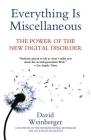
  • David Weinberger's Everything is Miscellaneous has been out for two months-plus and I haven't mentioned it, yet. It's a quick and fun read on data organization and metadata and how many new possibilities are unlocked by allowing folks like us to organize information in an infinite amount of ways. It's a bit of a celebration of algorithms and consumer-provided data; thus, it lauds web sites like Google and the Evil Empire (amazon) for changing how people are able to access information and goods. It also completely ignores the negative effects on physical communities and spaces - like the beautiful bookshop in which I work. That said, Weinberger never pretends to be writing anything other than a business book. So long as you maintain the skepticism of homogeneity that can be a side effect of massively-adopted convergent modes of information organization, this book will help more independently minded folks and businesses to adopt strategies to maintain competitiveness and undermine the status quo.
  • And for something completely different and un-technified: we're beginning bike delivery from our shop.It's a way to serve readers who aren't able to get out of the home for whatever reason, to readuce our carbon imprint and, perhaps most importantly, get some excercise and fresh air during the workday.

Wednesday, June 18, 2008

Awesome - Jack Pendarvis

Okay. All right. Good. Nice. Cool. None of these words could adequately describe the latest book from Jack Pendarvis (could have used ‘adequate’ in that first group of words). Luckily, he’s provided us fellow typists with the perfect pull quote in the form of his title, Awesome.

That’s definitely appreciated, because although I spend a good fifty percent of my day marveling at my own writing skills*, I’ve rarely been able to describe what is good about funny books. I can say, “this book is funny”, “hilarious”, “gut-busting”, “urine-extracting (I know, eww)”. Sure, I could say those things, but how do you, the prospective reader, know if I have any sense to judge ‘funny’? You don’t, so let’s just stop thinking that way. I don’t doubt you, and this blogging*2 thing is a two-way street.

To this point, Jack Pendarvis has published two short story collections; The Mysterious Secret of the Valuable Treasure and Your Body Is Changing. While both are ridiculously funny (trust me, remember?), I’d wondered what a book-length story would look like. It’s better than I could have hoped, and Sex Devil*3 set the bar astronomically high.

Awesome is the story of Awesome, a giant man in every way. Sure, he’s a big fella, but it’s not all brawn with him. He’s also the world’s foremost expert in robot creation, time travel, whale songs, effortless seduction and Alpine bells. I could list more of his CV*4, but we’re limited to the space the internet affords us.

Okay, maybe this is a cow bell, but you get the idea.

Suffice to say, Awesome seems to have it all. But, as is so often the case with our betters, Awesome still has a, to paraphrase Extreme*5, “hole in his heart that can only be filled by you”. Actually, not ‘you’, per se, but Glorious Jones. Who’s Glorious Jones? Now I feel like I’m doing your reading for you, but okay, I’ll bite. Glorious Jones is the special lady who sends Awesome on a globe-spanning, time traveling odyssey in search of the rarest objects to prove his devotion and win her hand in marriage (in a religion created by Awesome).

"If you don't like what you see here, get the funk out."

Whether hanging out with hay-stacking California hippies, their deadly empiricist enemies, his faulty robot Jimmy or rival giant Goliath Brigadoon*6, Awesome proves to be the most compelling fictional character since The Mighty Thor. Sure, he may not have that cool winged Viking helmet, but a snazzy brown derby will do in a pinch.*7

"Verily, my helm is rad!"

The final litmus test for just how funny this book is; it had me laughing out loud on the bus. Anyone who’s taken the bus knows that laughing out loud on the bus is the surest way to being spoken to on the bus, and no sane person wants that. Still, I was willing to suffer the slings and arrows of captive audience conversation just to keep reading more of Awesome.

As I write this, Awesome is still 74 days away from publication (edit: Now it's even less, but I can't be bothered to do the math.). Don’t fret, stay calm. Well, at least stop clawing at your eyes, you’ll need them. You can preorder and keep yourself occupied with Mr. Pendarvis’s other books and his impressively updated blog in the meantime.*8


*Not really. I’m entirely accepting of my writing skills. And conceited.

*2 I believe my computer is from the 1990s as it does not recognize the term ‘blogging’. ‘Bogging’ was the suggestion, so perhaps it’s from the 1890s.

*3 The opening story from Mysterious Secret…, and the funniest thing I’ve ever read.

*4 CV: Short for curriculum vitae, a fancy way of saying resume. Wow, this is a condescending footnote. And it’s not helped by the reference to the editorial ‘we’re’ following ‘CV’.

*5 They won a Grammy………probably.

*6 Were I having a boy in ten weeks time, this name would have rocketed to the top of the list. Respect and power await a ‘Goliath Brigadoon’.

*7 Yes, Thor’s enchanted hammer, Mjolnir, is ultra-badass. No, Awesome doesn’t have an enchanted hammer. I believe I’ve made my case.

*8 I’ll be rereading my galley, complete with Mr. Mxyzptlk sketch. Stang!*9

*9’Stang’ is universal slang meant to express happiness or refer to money. Read the blog.

Monday, June 16, 2008

Get In

by Bayard Godsave

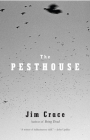
The setting, the dense mist that had settled on Milwaukee, was like something out of one of Jim Crace’s books, where lost worlds tend to materialize slowly from the pages, with the poetic quiet of grey summer afternoons. The store had just gotten a call from Jim’s publicist at Viking: There was trouble with his plane, and he’d be taking a later flight, but not to worry, she promised us, he’d make it there on time.

Well, I thought, this is all very dramatic. But the real drama was unfolding elsewhere.

Above our heads, the British author sat in his coach seat, patiently waiting as once again the voice of the captain came over the 727’s PA system. This time, there were no more assurances that they would be landing “just as soon as this fog lifts.” This time he told them that he had bad news, that the plane could no longer circle the skies above Milwaukee, awaiting a break in the weather, and would have to turn around and return to Minneapolis. There was grumbling from the other passengers, but Jim, though disappointed, sat quietly. “I’m British,” he would say later, “and we’ll sit through anything politely.”

Milwaukee was the last stop on what had been a three week tour promoting the trade-paper release of his latest novel The Pesthouse, and Harry W. Schwartz was to be, in all likelihood, the last place he would read from that book. Ever. A pity it would be if he missed that.

As he thought about this, the captain’s voice came over the PA once more. The plane was running low on fuel, and would have to land in Madison. But,” the captain said, “this is only a refueling stop. We’re not letting anyone off the plane.”

But once on the ground, there was a genuine revolt. Angry passengers—men and women who lived in Madison, and only wanted to be allowed home—got up from their seats and insisted they be let off the plane. The crew resisted for a while, but finally they had to relent, and Jim Crace slipped in with the stream of Americans making their exodus from the plane.

“But how am I to get to Milwaukee?” he would later say. “There was a bus, something called a Badger Bus? But it wouldn’t get me into Milwaukee until seven-thirty, and that wouldn’t do. So I decided to do as I would have done when I was a young man. I decided to hitch a ride.”

He stood on the side of the road, just outside the airport, put out his thumb, and waited. And it wasn’t long before a car stopped, one of his fellow passengers, stranded, like Jim, in Madison. He already had two sailors riding with him. “Where you going?” the man asked.

Milwaukee,” Jim said, in his British accent.

“Get in.”

Jim’s reading that night (which was on time and as scheduled) was amazing. As he spoke about the genesis of his latest novel, he spoke of the importance of letting the story take its own directions. “Narrative has been around for as long as human beings have, it’s learned a few things,” he said. “Narrative is wise.” And I thought of all he’d been through to get here. It was as if the story he’d told, the story of his trip, had always been waiting to happen, and it was by trusting in that story, and letting unfold as it would, that Jim was able to get here safely, and on time.

Tuesday, June 10, 2008

City of Thieves

by Sarah Marine

2007 was the second year in a row that I ended with reading
The Road by Cormac McCarthy. Having spent the bulk of the 365 days engrossed in all works by Dean Young, Rebecca Solnit and a variety of other poetic and non-fictional tomes, I found it quite difficult to transition into a proper novel, and I'm sure you all know what it's like grasping for palpable literature in the wake of McCarthy.

Swiping
City of Thieves from Stacie's events shelf was easy enough- no alarms or barking dogs- and upon taking it home, devoured it. I literally sat on the couch and refused to eat or respond to Dr. Godsave until completing the frantic read. It wasn't until then that I realized what I had been missing with the novel. City of Thieves was fantastic in resisting the writers-workshop-bred urge to thinly experiment with form and narrative. The book was fun and
exciting and I couldn't put it down. Now, I am aware that if someone was recommending a book to me and used the words "fun", "exciting", "couldn't put it down", I would avoid the thing at all costs.
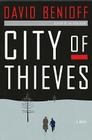
City of Thieves, however, was all of those things, minus a love story, set in the center of a starving city and just plain SMART. David Benioff has clearly benefitted from his screenwriting experience, incorporating a cinematic feel to the action, which is again and again refreshed by the imagination and comfortable circumference of the story. The only comparison I can think to draw is to Jeanette Winterson's The Passion. I really enjoyed this book, and am willing to admit that I have read it twice.


---------------------------------------
More on
City of Thieves
by Jay Johnson

David Benioff, author of 
The 25th Hour, which was made into a movie by Spike Lee, visited our Downer Ave. bookshop on Wednesday, May 21 in support of City of Thieves.  Our good friend (and customer) Tim was there to record it.  Check out the audio on his blog.  

City of Thieves is an impossible to put down story partly based on David's grandfather's real experiences during World War II, but bleak as the story can be it's also funny at times, moving, and honest. Our booksellers have really enjoyed reading 
City of Thieves, and this is what some of them are saying:

City of Thieves"A riveting rush of a journey of finding compassion, humanity and intimacy in the bleak, cold winter days of a dark time in history."- Stacie Williams, Downer Ave.

"Be careful. Once you read the preface to this novel plan on spending the rest of the evening with this book. A Russian immigrant, Lev Beniov, finally tells his American grandson, a writer, his incredible story of a week in January 1942 just prior to the siege of Leningrad (Piter). Only Seventeen-years-old, Lev and a new friend avoid immediate execution when they agree to perform a preposterous task, which leads to traveling behind German lines. 
City of Thieves delivers a difficult and chilling look at the hardships of war, yet friendship, love and even humor are intertwined. The suspense is unrelenting."-Shawn Quinn, Accounting 

"During the siege of Leningrad, 17-year-old Lev Beniov is arrested for looting the corpse of a German soldier.  Rather than being executed, he and an Army deserter are spared by a colonel who sends them on a ridiculous mission: to find and bring back a dozen eggs for his daughter's wedding cake.  A terrific coming of age story, a harrowing tale of war and survival, a funny and endearing story of an unlikely friendship; 
City of Thieves is all of this and more.  What a wonderful book!"-Dave Mallmann, Brookfield

Thursday, June 5, 2008

All Souls

The Invention of Marias

by Jay Johnson


First, let me write that I own my fellow bookseller and great friend Joe Lisberg a debt of gratitude for his unending advocacy for the works of Javier Marias, without which I would have likely never sought his amazing works. Joe has been telling readers about Marias likely as long - and as eloquently - as anyone in American bookselling.

Rather than begin my exploration of Marias Voyage Along the Horizon, his earliest work which was recently released by McSweeney's in 2006, I chose All Souls. After much discussion and debate between this short novel and A Heart So White and When I Was Mortal, I felt my interests in authorship, the blurring of fiction and nonfiction, and my leanings towards metafiction, among other things were well-served. As a bonus, reading All Souls allows for a more thorough reading of Dark Back of Time, a "false novel" based on the writing and reception of All Souls.

I'm happy to write that it was a great choice. All Souls delivers on many levels: a tight narrative with unending insight into memorable characters, some romance and - above all - the highest quality prose*. As Joe often quotes: you don't read Marias to necessarily find out what happens next, you read him to find out what his narrator will think next. And you, dear reader, will be rapt. This is by no means a perfect novel; it is, however, well-paced, always interesting and readable, and has just enough balance between plot and high-mindedness to easily carry the reader to end of All Souls - and into the beginning of Dark Back of Time.

(* Certainly, Margaret Jull Costa, Marias' tranlsator for all of his English editions, besides Dark Back of Time, deserves a note of admiration. Though, when you read Dark Back of Time, it becomes clear that Marias' talent is true.)

All Souls begins with the following disclaimer:

Given that both the author and narrator of this novel spent two years in the same post at the University of Oxford, some statement may be in order on the part of the former, before he finally yields the floor to the latter, to the effect that any resemblance between any character in the novel (including the narrator, but excluding “John Gawsworth”) and any other person living or dead (including the author, but excluding Terrence Ian Fytton Armstrong) is purely coincidental as is any resemblance between any event in the story and any historical event past or present. –J. M.

The novel All Souls presents an interesting problematic to the traditional notions of the realist novel. Boundaries of fiction and nonfiction, truth and lies, memory and representation are being crossed—and, more importantly, confused. The specific interest I have in this novel, since many other “novels” or “memoirs” achieve this confusion, is the role the author plays in the destabilization of the text.

One way of looking at the novel is as realistic artifice, a representation of the real world, authored by a hidden being whose name appears only on the cover and a few inside pages, and narrated authoritatively by either a character or omniscient being. Barthes and Foucault (among many others, if not all) do not see the novel in this way, as evidenced in “The Death of the Author” and “What is an Author?”, respectively. While post/modernism may argue for the end of realism, certainly many contemporary readers still approach novels in the aforementioned manner (ie reading for pleasure v. criticism). Which is one of the reasons why the specific case of Javier Marias is interesting to me. Largely unknown in the United States, he is very recognizable in his native Spain, where he also writes a weekly column for the Madrid daily el Pais. His novels regularly appear on bestseller lists; his readership is relatively wide. While Marias is not averse to experiment and intellect and long, challenging—yet unmistakably beautiful—sentences, he enjoys popular success while addressing critically challenging ideas.

In All Souls, time is employed as a tool in undermining the authority of Javier Marias/Javier Marias. Being an acknowledged recollection of his time at Oxford, the narrator admits to the subjectivity of his memory and its effect on the narrative he tells. Will, the porter at the Taylorian building, has no firm connection to the concept of the present. This porter experiences a different year each day and his experiences are without pattern. The only instance that the faculty (including the narrator) are able to determine what year the porter might be occupying at any given moment is the year of his wife’s death, which Marias ascertains by consoling him. This hidden information of memories is a recurrent theme in All Souls, where the narrator attempts to probe both his own and others’ reconstructions of the two years that concern the written narrative.

Marias the narrator admits to the imperfection of this exercise in writing. Will refers to the faculty by names of faculty members belonging to whatever time period he might be inhabiting that day. Marias is admittedly unsure of his own intentions, whether to reject or to forget portions of memories, and acknowledges the opacity of self-revelation intrinsic to the rumor-fueled Oxonian politic. In form, this dichotomy between truth and fiction is further explored. Marias the narrator employs a first person present tense in recounting thoughts during a specific scene, which has been narrated in a past tense.

Javier Marias is not the only proper name of an author within the covers of All Souls. A few lesser-known writers become the object of antiquarian book searches, the most prevalent of which is the British writer John Gawsworth, whose “real” name was Terrence Ian Fytton Armstrong. Disregarding Gawsworth’s own fascinating narrative involving, among many things, the Realm of Redonda for the purpose of this, how can a reader distinguish between the writer Marias and the character/narrator Marias? Through the (enjoyable) instability of the text, I don’t believe a distinction can (or should need to) be made. Like memories, fiction is imperfect, in the sense that the Author can never perfectly subtract himself from the writing. An analog to this argument can be found in Barthes’s and Foucault’s concerns with intertextuality and the assemblage of preexisting ideas/texts into a new product.

Within All Souls, Marias seems to argue for a different type of truth—a personal memory that is tangible, if not universally tenable. He writes “that’s why I am now making this effort of memory and writing, because I know that otherwise it will all be obliterated”. Memory is an effort, not a default, which is a reflection of its malleability. In All Souls, it isn’t simply preserved, though, as claims of truth are undermined at most every opportunity. Memory—and narrative, here—are a variety of personal truth; writing can create its own validity, without ties to the actual or experiential. Or, as Marias superbly writes, “when true knowledge proves irrelevant, one is free to invent.”

Proust Was a Neuroscientist

Good friend Rebecca over at our sibling company, the hippest and most-knowledgeable business booksellers in the entire world, 800 - CEO - READ (or 8CR for those in the know), passed me this fine link to an  interview with Jonah Lehrer, author of Proust Was a Neuroscientist, from kottke.org.


NPR's Morning Edition did a fantastic piece on one of the stories from this great work of nonfiction about one of the more fascinating aspects of food science (and one my very  most favorite words), umani - roughly, "savory" in Japanese, and the most recently discovered fifth taste (in addition to sweet, salty, sour, and bitter), long thought to be nonexistent.  

(And, as a much-deserved shout out, check out their amazing blog, fresh with original manifestos from brilliant authors, their business book awards - with vid below - and "the book", which is a mystery you'll just have to uncover yourself...)


Wednesday, May 28, 2008

The Invention of Morel

Fiction Machine: Alfredo Bioy Casare's The Invention of Morel

By Jay Johnson

If you're in search of a tight, little novella to kick-off you're summer reading season, I must recommend Alfredo Bioy Casare's enigmatic The Invention of Morel. Written in 1940, this book may be short and a quick read, but imagery, text and questions will pleasantly linger for weeks after you've read it for the second or third time. As always, The New York Review Books presents an informed, stylish and durable edition of a work that is important to several areas of writing: science fiction, fantasy, magical realism, adventure and Latin American literature, in general.

Bioy, a contemporary and friend of Borges, weaves a trance-like confession of an obsessed fugitive into a search to discover the devices behind the bizarre actions of the deserted island's mysterious visitors and their leader, Dr. Morel. Science fiction and adventure readers, admirers of fantasies like The Island of Dr. Moreau and the television series Lost, and fans of Alain Resnais' film L'année dernière à Marienbad - the film, written by Alain Robbe-Grillet, author of The Erasers, is influenced by Morel - would thoroughly enjoy this brilliant and overlooked work.


In the introduction to The Invention of Morel, Suzanne Jill Levine writes, “for Borges and Bioy, the fantastic was a far richer medium compared to what they then considered the impoverished artifices of nineteenth-century realism” (vii). This sentiment certainly plays out in the novella through multiple layers of discourse.


Perhaps the most interesting and rich example of fantasy coming into conversation with the “impoverished artifices” of realism is centered on the climax of the novella, when Morel delivers his speech.[1] The narrator, whose is writing is posed as that of a diarist, writes that he had grabbed the notes that Morel read off of to deliver his address to the guests on the island. At this time, the reader is given the fourth footnote of the novella, which states:

“For the sake of clarity we have enclosed the material on the yellow pages in quotation marks; the marginal notes, written in pencil and in the same handwriting as the rest of the diary, are not set off by quotes. (Editor’s Note.)” (65).

First, it is important to note that the Editor is clearly a construction of the novel; there is no true Editor to the New York Review Books’ edition. One of the functions of the Editor, in this footnote, is to reinforce the artifice of the narrator as diarist. If there is an actual sheaf of yellow pages, ostensibly there is a narrator, who introduced us to this yellow sheaf. By extension, there is a Morel, who delivers a speech and invents a machine that captures perfect representations of its subjects—and all the other repercussions of Morel’s invention. In this respect, the existence of an editor’s footnote supports the artifice of realism.

While the existence of an Editor perpetuates the conceit of the novella, the actual text of the note achieves the opposite. The voice of this footnoted section is the same voice found throughout the novella, without exception. Moreover, the form of the text in this section casts serious doubt on the reality of the rest of the work. Morel’s speech takes the form of a scene, as prescribed by the footnote. His speech appears in quotes, while the narrators marginalia appear as narrative observation. The physical existence of Morel’s speech is differentiated from the diary conceit maintained throughout the remainder. If the appearance of this special section is indistinguishable from the other sections, however, how is the reader to believe in this artifice of realism? That two differentiated mediums are ultimately indistinguishable undermines the conceit of realism in The Invention of Morel.

Given the initial sentiment of the introduction, this destabilization of realism is ultimately not surprising. On a tertiary level, the “Editor’s Note” further problematizes notions of realism, as well as the boundary of where a text ends (in the sense of author-editor-reader relationship) as well as authority of narrators and editors. In the eighth footnote of the novella, the Editor refutes the narrator’s citation of his own text, declaring that the excerpt the narrator states to appear at the beginning of the text does not exist (95). Examining the text itself, the narrator is vindicated: the exact text does appear near the beginning of the book. Thus, the Editor has failed a basic condition of her position: that of existing outside of the text, in a position of reference to the artifact itself.

Entering The Invention of Morel through the instance of Editor’s Note to the climax—Morel’s speech—points to a reading supported by the introduction: “In Bioy’s paradoxical universe the symbol turns upon itself: his texts are filled with tantalizing allusions which are no longer keys but rather enigmatic ciphers” (xi). Rather than providing the reader with clues, the Editor undermines the possibility of a literal, realistic interpretation of the text.


---------------------------------

[1] This is certainly one reason why Borges considers The Invention of Morel to be an example in excellent plotting. Morel’s speech is not only centrally important to understanding the text on the most basic level; it also holds many insights into a variety of interpretive avenues.