Thursday, October 18, 2007

Slush Pile Update - Dan Wickett of Dzanc Books

This is part three in a series of dispatches from independent publishers, instigated by a banal and ignorant comment from an editor at Simon & Schuster about the dearth of unsolicited manuscripts being published today.

The previous two installments can be found below:

The Slush Pile Is Dead! Long Live the Slush Pile!

Slush Pile Update - Eli Horowitz, McSweeney's

I recently had a moment to send Dan Wickett, the Exectutive Director and co-founder of Dzanc Books, a Michigan-based nonprofit publisher, founder of the Emerging Writers Network and a member of the Litblog Co-op. Dzanc supports lit journals across the country; as the Editor-in-Chief of cream city review, a student of fiction, and a reader who is interested in finding fiction, poetry, and nonfiction that has more than simple commercial potential, I would suggest Dzanc Books deserves at least a peek from discerning readers.

They make it easy to get hooked: they have All Over an exciting new collection from Roy Kesey (published in great journals like The Iowa Review, McSweeney's, and The Kenyon Review) out now.

A new collection from Yannick Murphy, author of the fabulous Here They Come (buy the swanky McSweeney's hardcover, dammit), the upcoming Signed Mata Hari, and a new story in the upcoming cream city review (shameless?) is due in February 2008.


JJ: How deep is your slush pile of novel-length (or short story collection) manuscripts?

Dan Wickett: It's done via email, but if printed out, it would definitely be taller than I am.

JJ: How many unsolicited manuscripts do you receive monthly?

DW: Since the P&W article, we've been receiving over three per day.

JJ: How often do you read manuscripts out of the slush?

DW: Every day at least one or two are looked at by myself and our initial readers.

JJ: How many slush authors receive correspondence?

DW: Every single mss [manuscript] submitted will receive at least a 'No thank you' email from us. If something specific jumped out as to why we weren't interested, we'll try to include that. If something is close - a manuscript that maybe we asked to see the whole thing and then didn't take it - we'll try to explain a little further as to why not.

JJ: How many books have you published from slush?

DW: The fourth title we publish, a trio of novellas from Hesh Kestin, will be the first title that is truly from the slush pile - a manuscript not solicited by us, or brought to us by somebody we knew. Then the Suzanne Burns story collection to follow that was also from the slush pile. The Robert Lopez titles as well. It seems we're running about 50/50 so far.

JJ: Do you and your assistant editors eat pizza, salads, or both?

DW: Both but pizza much more often in my own case.

JJ: Would you rather read a slush pile MS or create a marketing sheet?

DW: Mss all the way.

For more on Dzanc Books, check their website and find the Sept/Oct Poets & Writers.

Monday, October 8, 2007

Try Not To Leave Your Fingerprints On The Cover - By Denise Dee

I know it's considered low-brow for a bookseller to confess to a love of true crime books but I've always been interested in the 'anti-hero'. People who were apparently so spellbinding they could get people to join gangs/cults, commit murder, or drink cyanide-laced Kool-Aid. Or at least that's how the story goes. There's an attention to detail and to pacing in true crime books that any writer can learn something from.

Helter Skelter by Vincent Bugliosi - This is a hefty book but it reads as if it's 50 pages long. Bugliosi zips us through the summer of love, hippies, the political climate in America, and the 'cast of characters', then puts us into the courtroom and smack in the locations where the crimes took place. I don't know that I will ever forget the image of the Manson girls and Charlie with Xs carved into their foreheads. The most haunting part of the book is when Manson says "I am only what you made me. I am a reflection of you". Someone is always going to act out our 'dark side'.

The Executioner's Song by Norman Mailer - Norman Mailer to my mind is usually way too heady. In The Executioner's Song Mailer brings us into the world of feelings. Mailer (who seemed to want to portray himself as an 'outlaw') meets up with a man who shows how deep 'outlaw' runs. Mailer stays put and listens and does a great job conveying Gary Gilmore's upbringing and the paths that led him to fighting to be killed for his crimes.

Shot in the Heart by Mikal Gilmore - Mikal, a long time staff writer for Rolling Stone is, yes, Gary Gilmore's brother. Mikal takes an unflinching look at the Gilmores, Utah, and some of the doctrines and myths of both the Mormons (blood atonement, for one) and what it is to be a 'man' in the West.

In Cold Blood by Truman Capote - I read this after seeing the film in high school. Even though Robert Blake is hard to get out of your head, Capote's writing had me forgetting there ever was a movie. Capote, simultaneously an 'outsider' and 'insider' in his own life, really seems to understand what it could take to get these men to the point of killing.

The Westies: Inside New York's Irish Mob by T.J. English - Hell's Kitchen Irish mobsters following in the footsteps of the Kerryonians, the Dead Rabbits and the rest of the Five Points gangs. This book is more brutal than the rest. It's fascinating to walk the streets of Hell's Kitchen with the writer as he reveals where the bodies are buried while showing the circuits in these men's brains that made them long to be 'important' and 'known'- even if it was for crime and murders. Not for the squeamish.

When Corruption Was King: How I Helped the Mob Rule Chicago, Then Brought the Outfit Down by Robert Cooley and Hillel Levin - And so I end my true crime list with 'crime' inside the Chicago justice system. I worked in a bookstore in Chicago blocks from where most of the action in this book takes place. Love Cooley or hate him (and I heard plenty on both sides) he's a compelling narrator to the goings-on of the system in Chicago. Mixes in a bit of history and a lot of colorful characters.

Who needs to invent characters when real life is chock full of them?

Monday, October 1, 2007

What's Next? Adventures in Sequential Art

What’s Next? Adventures in Sequential Art

Sponsored by Harry W. Schwartz Bookshops and cream city review

How many ways can you tell a story? John Porcellino (King-Kat Comics), Max Estes (Coffee and Donuts), and members of Milwaukee’s Workshed Studio (Sawdust) discuss their individual work, their varying creative processes, and the interplay of words and pictures in storytelling.

Monday, October 15, 7pm Harry W. Schwartz Bookshop, 2559 N. Downer Ave.

Can't make it? Leave a question for the panel in the comments below, then check back and listen to the podcast.

Workshed Studio (Justin Riley, Alan Evans, Randy Malave, Jr) is a Milwaukee-based comic book studio. They're the guys who read too many comics, watched too much television, snuck in to too many movies and even paid attention to those books without pictures. They hope to take equal parts pop culture, social relevance and homage to the history of comics and mash 'em together into a fully enjoyable storytelling paste. They recently published Sawdust, an anthology of their work.


John Porcellino (King-Kat Comics) was born in Chicago, in 1968. He began writing and drawing at an early age, compiling his work into small, handmade booklets. His first photocopied “zine” was produced in 1982, at the age of 14, and he began his current series, King-Cat Comics and Stories, in 1989. Since then, King-Cat has been his predominant means of expression. Drawn & Quarterly has published two of his books, King Kat Classix (2007) and Perfect Example (2005). Porcellino currently lives in Denver with his wife Misun, and a small black cat named Maisie Kukoc. (Check out a few samples from John Porcellino's work at the Drawn & Quarterly website.)


Max Estes (cream city review) is a Milwaukee-based graphic novelist and Comics Editor for cream city review. Top Shelf has published two of his books, Coffee and Donuts (2006) and Hello, Again (2005). Max's comics, artwork, and short stories have been published in Canada, England, Spain, and the United States in various art books and comic anthologies. He is also a part-time instructor at the Milwaukee Institute of Art and Design where he teaches Illustration and Sequential Art courses.

Monday, September 24, 2007

No Country For Old Men - Cormac McCarthy

At this point, it may well be silly to recommend this book. It’s been out for almost two and a half years, and the movie adaptation (by the Coen brothers – HOORAY!) will be in theaters in a few short months. On top of that, Cormac McCarthy has jumped on the Oprah train with his most recent book, The Road. The publicity machine running behind this phenomenal author and his amazing work doesn’t seem to be hurting for fuel. All that being said; this book is so good that it would be wrong of me to read it and not say something.

Cormac McCarthy is the kind of author that people will teach classes about (perhaps they already do) and his work will be dissected for meaning, nuance and style. I’d say he was an exemplar of a certain crop of writers working the themes of dying culture, dried-up hopes and barren psychological landscapes, but he’s not. He’s not an ‘exemplar’, because no one else does what he does. Sure, some try, but no matter how much they get right, there is something altogether different and in my opinion, better about McCarthy’s writing.

On it’s face, No Country For Old Men is a story of a man who finds a case of money left from a drug deal gone bad and makes a fateful decision that alters his own and the lives of the people around him. But then it’s more. McCarthy is famous for his reticence to discuss his work, and hearing opinions like mine, making it out to be grander in scope than probably intended is doubtless one of the reasons why. But here goes…

I easily viewed the protagonist, Llewelyn Moss, as a Promethean character. He’s an everyman, stuck in his strata and desperate for more than life gave him. Desperate enough to steal the fire of the gods. Unfortunately, the gods in this time and place are gods of greed, violence and amorality. Moss is quickly out of his depth. There are no supernatural elements to the story (unless you count Anton Chigurh, the downright spooky killer on Moss’s trail), but the willingness to wade into the morass of bloody retribution and risk what little he has at the story’s beginning will make you question Moss’s sanity. Chigurh is a representation of the forces that ordinary men have no business butting up against. He’s long past humanity, in fact long past even the code of conduct expected of a man in his line of dirty work. The final member of the trio of perspectives is Ed Tom Bell, the sheriff whose life is turned upside down amid the chaos that ensues. Sheriff Bell is the standard set for community and order in an increasingly violent and, to him, senseless world. You can hear Bell’s bones ache every time he reads a newspaper, every time he hears about the latest transgression against the people he protects. These three men represent the stages of a world going mad. The old guard, the new return to savagery, and the point at which one embraces the other.

Questions of humanity regressing back to animalistic impulse are prevalent in McCarthy’s work; the battle to hold on to ethical and moral standards seems to be going badly. At the end of the day, the visions of violence and depravity presented serve to contrast and enhance the dwindling few who strive to do right. There is something mythic at work in No Country For Old Men.

Wednesday, September 19, 2007

Two Quickies - The Shock Doctrine "trailer" by Naomi Klein & 52 Projects / Working for the Man by Jeffrey Yamaguchi

Both of these interesting finds come by means of exchange.


The Naomi Klein video comes recommended by Noel, whom I spoke with briefly at our Downer Ave shop last night. This book hit the shelves yesterday and seems poised to fly into the hands of a wide, discerning readership.


The 52 Projects link comes from the extremely
unpersonal (and admittedly amazing) Feedburner statistics. (Plug: subscribe to our feed, if you haven't already.) Say what you will about Williamsburg, but I am certainly a fan of spontaneous - or prescription-aided - public art. Make your community beautiful! 52 Projects is available now; Working for the Man will be in stores in November - but is, of course, available for pre-order now.

Friday, September 14, 2007

Presenting Punk: Year-Round Gifts For The Punk At Heart - By Denise Dee

There's so much emphasis in the book industry about selling the 'latest' books. I might be a bit of an aberration in that I am much more excited about selling older books. I am passionate about books I consider 'classics'; and don't worry - I'm not talking about ones that were crammed down your throat in school or by some well-meaning friend. These books are must-haves for your punk library.

From the Velvets to the Voidoids by Clinton Heylin.
Sometimes it is necessary to go backwards to go forwards and Heylin gives us an excellent history of the music leading up to punk. How can you understand Richard Hell without first taking a look at John Cale and Johnny Thunders? Glam gets trashed and later thrashes in this book which moves from New York to London to Cleveland with a few stops in other cities. Cleveland gets long-deserved credit for contributing many seminal members to the punk rock scene. I read this on a Greyhound bus trip and pictured people leaving their hometowns to go find a place where they could 'fit in'. Heylin nails the simultaneous excitement of rebellion and belonging.

Punk: The Definitive Record of a Revolution by Stephen Colegrave.
A must-have if for no other reasons than the price and pictures. This stunning book is only $25 and will have you 'You Tubing' videos of bands that you may have forgotten about (or never heard of in the first place). Of course, it would be impossible to have a 'definitive' book that you could actually lift - but this book does a nice job of mixing bands that stayed around for a while with one or two-hit wonders. This makes a great gift.


Please Kill Me: the Uncensored Oral History of Punk by Legs McNeil and Gillian McCain.
Legs McNeil founded Punk magazine along with John Holstrom. Truly one of the first 'zines in the U.S. A nineteen year-old co-worker who was in no way, shape, or form into punk actually bought this book after hearing me rave on about it to a customer for the thousandth time. He started recommending it. He said the energy of that time was contagious. Often people think of punk as nihilists who sat around complaining. Punk was a whirlwind of energy with many people in more than one band. McNeil and McCain put the 'oral history' format to great use and mix it up so different people give you perspectives on how the New York punk scene came to be and mutated. Buy a copy for anyone who loves the spirit of D.I.Y.

Rip It Up and Start Again: Postpunk 1978-1984 by Simon Reynolds.
My heart belongs to punk. But I think it's important to see where punk went and some reasons why. Reynolds covers no wave, new wave and other postpunk movements. Essential reading if for no other reason than the chapter on the No Wave bands. Their influence spread way beyond the sparse number of groups and audience members involved in the scene. If you can find it purchase No New York and listen to it while reading this chapter. Reynolds visits some of the West Coast punk bands and you start to get a sense of how punk changed in California and then again as it spread across the country.

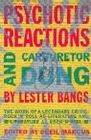
Psychotic Reactions and Carburetor Dung by Lester Bangs. Edited by Greil Marcus.
Detroit is another city that had enormous influence on not only the punk scene but on music in general. Could much of American music exist without Detroit musicians? I don't think so. Lester Bangs was an early rock critic who found a home in Detroit writing for Creem magazine. He knew the Stooges, the MC5, Patti Smith, Destroy All Monsters, as well as jazz, soul, and blues musicians. His writing style is very much no punches pulled. It shows how raw energy that used to be worked out in fist-fights could be turned into a song or an article. Be ready to laugh and to call up friends and read them passages from this book.

I could add at least another ten books to this list. Any one of these books is a great place to start.

Monday, September 10, 2007

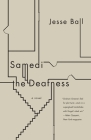
Samedi the Deafness - Jesse Ball

Samedi the Deafness, the first novel from poet Jesse Ball, is generating excitement within a range of booksellers and bookshops at Harry W. Schwartz. I've enjoyed about two-thirds of its mystical pondering and abstract maze and will add my thoughts to those of my fellow booksellers when I find ninety minutes to finish this quick-flowing paperback original.

"This book confounds me every time I attempt to summarize or describe it. The story screams and clamors every time I pick it up and try to put it in a box. It's diamond-like in its brilliance and multi-facetedness.

James Sim is a character unlike any other I've encountered. He's also similar to many others in that the harder he tries to solve the situation confronting him, the further he falls into the hole, like Alice in Wonderland.

I've attempted to describe this novel to friends, customers and colleagues in the following ways: real, surreal, Kafkaesque, a spy novel, a love story, a puzzle. It is all and none of these things. It is itself and itself alone.

I could describe the rest of the amazing cast of this gorgeous, reverberant novel, but all I'll say is: please, please do yourself a favor and read it."
--Carl Hoffman, Bayview


"Immediately steeped in this mind-bending novel, I couldn't stop reading even as the world around me felt more surreal with the turn of each page. I felt pulled with the protagonist from everyday life to find myself at wits' end, faced with treachery, deceit, and anxious anticipation. The day I finished reading the book, I ate a fortune cookie which read, "Every half-truth is a lie"; in that same vein, we find in every lie, a half-truth."
--Wil Tietsort, Shorewood

I've heard nothing but praise about his poetry, too, and it should appeal to fans of Josh Bell and David Berman. Or so I hear.